Working paper: The myth of institutional rigidity
I’ve just posted a short working paper on SSRN: The myth of institutional rigidity. Comments would be very much appreciated. Abstract follows: Read more
Mar 24
I’ve just posted a short working paper on SSRN: The myth of institutional rigidity. Comments would be very much appreciated. Abstract follows: Read more
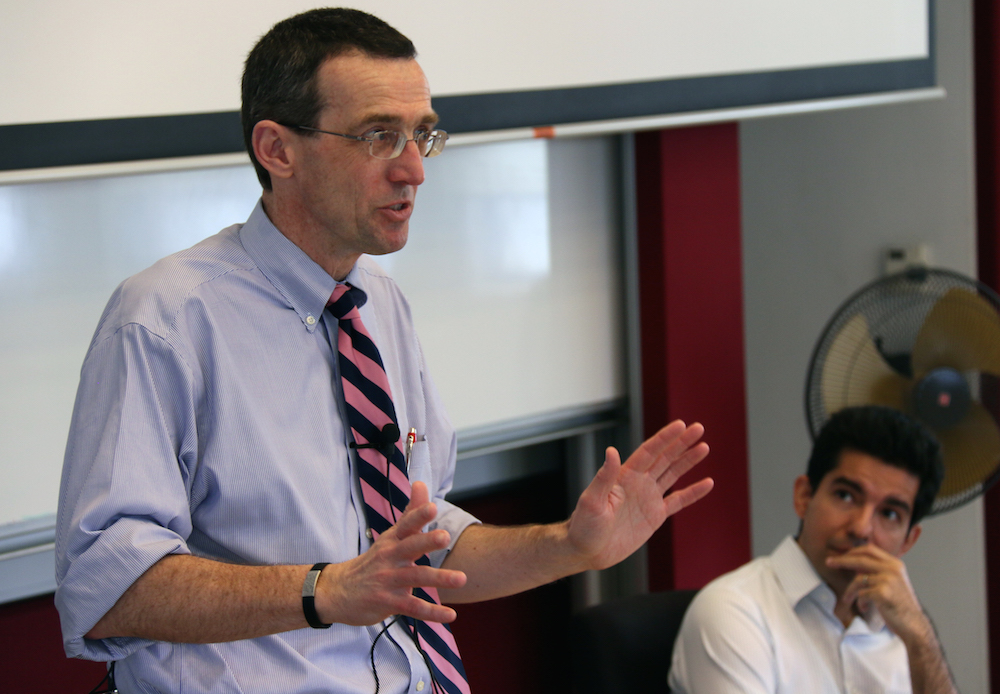 I gave a lunchtime talk at the Lee Kuan Yew School of Public Policy at the National University of Singapore on March 9. More details here | Flyer here. The paper that was the basis of the lecture is available on SSRN. NUS Professor Rahul Sagar moderated the discussion.
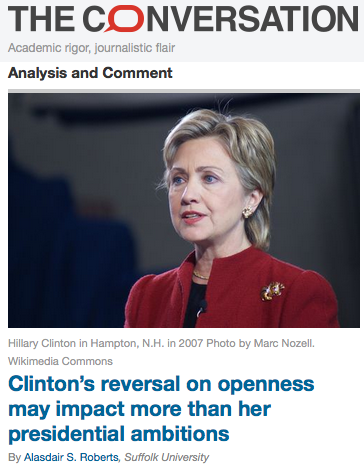 I’ve written a column for The Conversation that contrasts Hillary Clinton’s email practices with previous commitments on governmental transparency. “The issue isn’t just whether Clinton complied with federal law. Over the years, Clinton subscribed to a higher standard on transparency. Her decision to privatize her email communications is not consistent with the strong statements on openness made by the Clinton and Obama administrations, and even her own State Department.”
 In a new volume from Routledge, Public Administration Evolving, Richard Stillman calls Large Forces: What’s Missing in Public Administration a “challenging polemic” in the field. More details about Large Forces here.
 In a February 25 speech in Dublin, European Ombudsman Emily O’Reilly discusses my address to Mexico’s Accountability Network last October as well as earlier work on the effect of Wikileaks.
Mar 1
A note for Sunshine Week, March 15-21, 2015. Louis Brandeis is credited with writing that “Publicity is justly commended as a remedy for social and industrial diseases. Sunlight is said to be the best of disinfectants; electric light the most efficient policeman.” But why did Brandeis say that sunlight is said to be the best of disinfectants? Because he was referring to a statement by James Bryce in his 1888 book, The American Commonwealth.

 I’ve written a short piece for Medium drawing on my S.T. Lecture at the University of Oxford this month.
 I’ll be delivering the Lee Lecture at All Souls College, Oxford, on February 26, 2015. Download the details from All Souls College. The title of my lecture will be Four Crises of Democracy. The paper is now available on SSRN (Revised on January 6). The Lecture is supported by Dr. Seng Tee Lee FBA through an endowment for an annual lecture in Political Science and Government. Read more
 Dennis Phillips writes a review of The End of Protest for the Australian Review of Public Affairs. Read the review here.
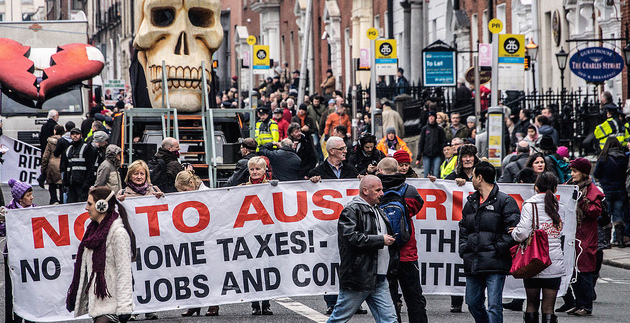 Following the launch of When The Party’s Over in London last week, I thought I would write this short note on Medium: Six Reasons Why It’s Easier To Impose Austerity. Comments welcomed.


