Skip to content

Forthcoming talks in May & June

May 14:
Technocrats or Populists: Who gained influence during the global financial crisis?
Victoria University of Wellington

Meeting with Hon. Bill English, New Zealand's Minister of Finance, May 13

Meeting with Hon. Bill English, New Zealand’s Minister of Finance, May 13

May 16:
Keeping Government Secrets in the Information Age
Australia-New Zealand School of Government, Wellington

May 20:
Governance discussion: How should public policy studies change in the Asian Century?
Melbourne School of Government

May 21:
Keeping Government Secrets in the Information Age
Australia-New Zealand School of Government, Melbourne

May 21:
The End of Protest
Melbourne Social Equity Institute

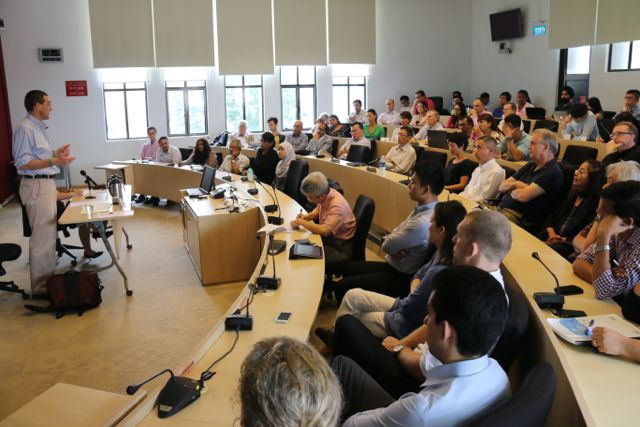
Lecture at Lee Kuan Yew School of Public Policy, May 27

Lecture at Lee Kuan Yew School of Public Policy, May 27

May 23:
Keeping Government Secrets in the Information Age
University of Tasmania Law School on May 23

May 27:
Keeping Government Secrets in the Information Age
Lee Kuan Yew School of Public Policy, Singapore

Talk to the LKY Doctoral Conference on Asian public policy issues.  Read the summary of the conference and my comments here.

Presentation at IPSA conference in Montreal in July

montreal2014-banner-logoI will be presenting my Large Forces paper at the IPSA conference in Montreal on July 22.  Details on the session.  This is one of the sessions organized by IPSA’s Structure and Organization of Government Committee, which is also the academic sponsor of Governance.

What’s missing in public administration? The big picture

Screen Shot 2013-12-23 at 2.55.35 PMThe following comment was published in the print edition of ASPA’s PA Times in May 2015.  Download the PDF.

It is a sad truth that the field of American public administration does not enjoy the respect among the public that it did two generations ago. This is partly a self-inflicted wound. Scholars in public administration have made choices that have undercut the public’s interest in the work they do. Read more

Why Occupy lost its steam

2014+17_islam_smallThe following comment was published in the May 2-8 2014 issue of The New Statesman, as part of a supplement produced by the Webb Memorial Trust.  Download as PDF.

It’s been three years since the magazine Adbusters sent out the tweet that triggered the Occupy movement: “On Sept. 17, flood into lower Manhattan, set up tents, kitchens, peaceful barricades and occupy Wall Street.” By late 2011, many Occupiers were convinced that the new movement would change the world. Some called it “one of the most significant and hopeful events of our lifetimes.” Today, however, optimism about the Occupy movement has faded away. Why did it lose steam so quickly? Read more

Why it’s time to rethink the problem of secrecy

These notes were prepared for forthcoming talks at the Australia-New Zealand School of Government in Wellington on May 16 and Melbourne on May 21; at the University of Tasmania Law School on May 23; and at the Lee Kuan Yew School of Public Policy in Singapore on May 27.

We all recognize that excessive secrecy is a threat to democracy. But technological changes of recent years have fundamentally changed the nature of the “secrecy problem.”   Today, we need a new way of thinking about secrecy that recognizes the advent of systems of public surveillance and control that span the public and private sector; that are supported by durable alliances of politicians, bureaucrats and politicians; and whose design and operation are practically unintelligible to most citizens. Read more

Technocrats or populists: Who gained influence during the financial crisis?

Screen Shot 2014-03-20 at 10.03.34 AMThese notes were prepared for a talk at Victoria University of Wellington on May 14.  Many scholars of public administration characterize the three decades between 1978 and 2008 as a period when we reconsidered the best way to organize public services. In fact, the stakes were higher than that. The essential question was an old one: in a democratic system, should power be put in the hands of technocrats, or citizens and their elected representatives? There was certainly a powerful global movement for democratization during that period. But there was an equally powerful, and ultimately more successful, movement for the shift of power into the hands of technocrats. Read more

In Policy & Politics, discussion of “Logic of Discipline”

LogicOfDisciplineThe current issue of Policy & Politics provides a special collection of papers on depoliticization, governance and the state edited by Matthew Flinders and Matt Wood.  In the final paper, Colin Hay of Sciences Po discusses The Logic of Discipline in the context of the recent financial crisis.  “Yes, there has been a widely acknowledged crisis,” says Hay. “But, as the contributions in this collection all make clear, the tendency in the wake of the crisis has been to reaffirm and further consolidate a ‘logic of discipline’ over a logic of public accountability and/or democratic choice.”  Free access to Hay’s article: Depoliticisation as process, governance as practice.

Talk on “Large Forces” at IRSPM conference in Ottawa

Screen Shot 2014-04-03 at 7.33.23 PMI’ll be giving a presentation on my Large Forces monograph at the research conference of the International Research Society for Public Management in Ottawa on April 11.

Law and Public Policy commentaries make news

Screen Shot 2014-04-01 at 1.06.19 PMTwo commentaries written by students in my Law and Public Policy class have proved to be newsworthy.  As this story explains, Governor Deval Patrick has just signed legislation that was discussed by Erica Mattison, JD ’13 in a commentary published in Rappaport Briefing last year.  And as this story explains, Governor Patrick has also approved regulations that would ban the shackling of inmates in labor, a practice discussed by Hilary Detmold JD ’12 in a 2012 commentary for Rappaport Briefing.  The commentaries can be read here.

Article about AFGD on Caixin website

logoEdwin Winkler of Columbia University’s Weatherhead East Asian Institute has written an analysis of America’s First Great Depression for China’s Caixin website. Winkler says that the book “may foreshadow some future aspects of American politics and USA-PRC relations.”   Read the article.