“Large Forces” updated, published in Kindle format
 My Large Forces monograph has been revised. It is now available in Kindle as well as paperback format.
Nov 21
My Large Forces monograph has been revised. It is now available in Kindle as well as paperback format.
 Publishers Weekly has a story about the launch of Cornell University Press’ new Cornell Selects imprint. The End of Protest is the first title in the series.
Back around the turn of the millennium, I was doing a lot of writing on freedom of information laws and other topics relating to governmental openness.  About 2001, I learned that NATO was overhauling its fifty-year-old policy on the handling of information shared among NATO member countries. The work was being handled by a body called the Ad Hoc Working Group for the Fundamental Review of NATO Security Policy (AHWG-FRNSP). Read more
 I presented my Large Forces monograph at the Northeast Conference on Public Administration on November 2. The Powerpoint version of the presentation is here. I’ll be revising the manuscript before I discuss it again at the Southern Political Science Association’s meeting in New Orleans in January. Here are key items to be addressed in the revision, following the very helpful conversation at NECoPA: Read more
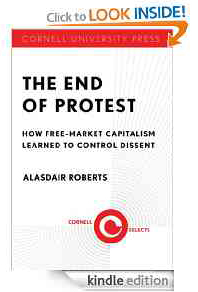 The End of Protest is now available on Kindle. You can also watch the short video about the ebook here.
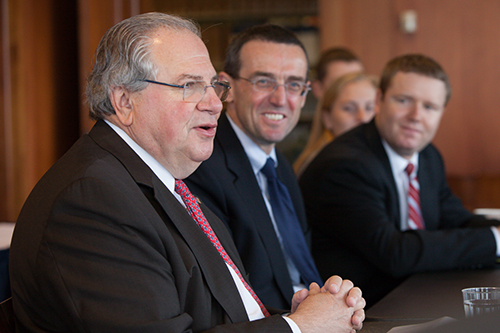 Massachusetts House Speaker Robert DeLeo talked about his work to my Law and Public Policy class this morning. It was a great conversation.
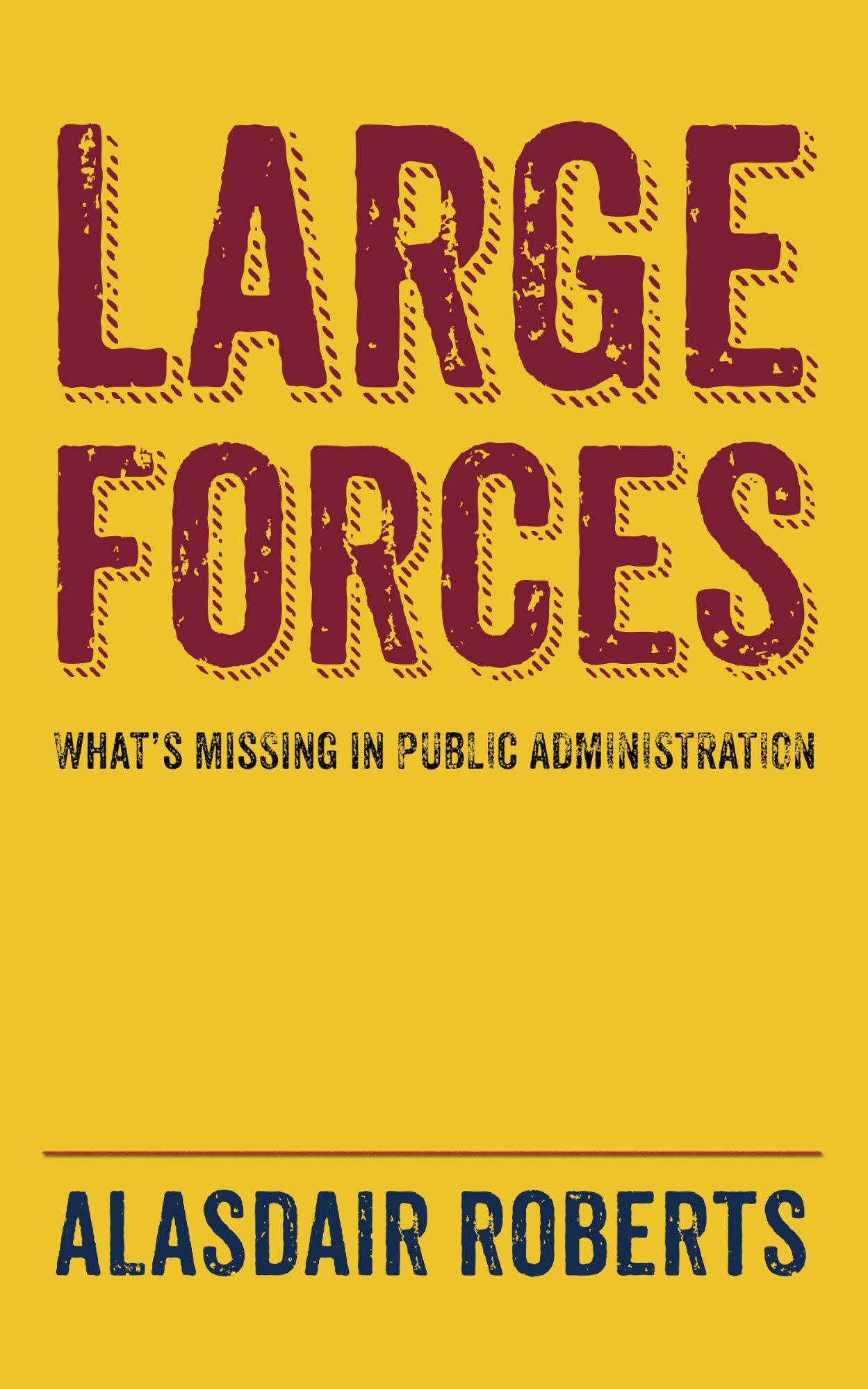 The first draft of my working paper Large Forces: What’s Missing in Public Administration is now completed and available here. I’ll be presenting this work at the New England Conference on Public Administration at the University of Delaware on November 2.
 In the current issue of Economic History Review, Adam Costanzo of Wiley College reviews America’s First Great Depression: “an admirable argument for reassessing the importance of the panic of 1837 and its subsequent economic crisis.” Read the review.
 A short video about The End of Protest is now available on YouTube.
 BiblioVault has just posted the details on my forthcoming ebook from Cornell University Press, The End of Protest: How Free Market Capitalism Learned to Control Dissent.


